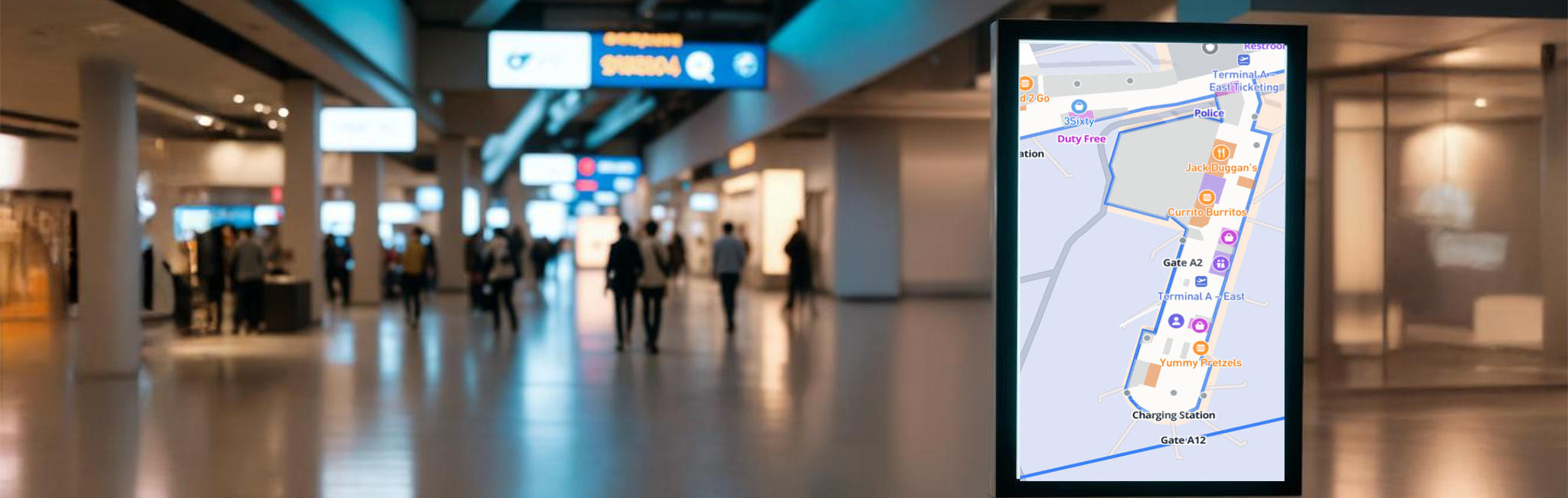

TLV Airport Map & Terminal Guide
Read our Trust & Transparency Statement
TLV Airport Map Topics:- Airport Terminal Maps
- Getting Around TLV Airport
- Frequent Flier Terminal Tips
- Security & Screening
- Food, Shops & Services
- Baggage Claim Areas
- Airport Map FAQ
Welcome to the comprehensive guide for navigating Ben Gurion Airport in Tel Aviv. Whether you're looking for terminal maps, dining options, or security information, we've got you covered to ensure a smooth and enjoyable travel experience.
Airport Terminal Maps
Do you know your specific departure or arrival terminal at Tel Aviv Airport? Select it from the list of terminal maps below, and use the interactive map to find all available amenities, and even navigate to them, or to another terminal if you're connecting at the airport.
TLV Airport Terminal Map: First, scroll down on this page to the map image. Then, tap or click on the image or button to choose your terminal or locate parking facilities. A window will open with an interactive map, allowing you to pan and zoom to a specific terminal or concourse, gate, or amenity. You can also use the search feature to highlight the location on the map of gates, restaurants, lounges, security checkpoints, baggage claim areas and more. In addition, get directions from one location to another, which is very handy when you know your arrival and departure gate for a connection!
IMPORTANT: If using a mobile phone, please check that you are using the latest software (e.g. iOS) version for the best results.
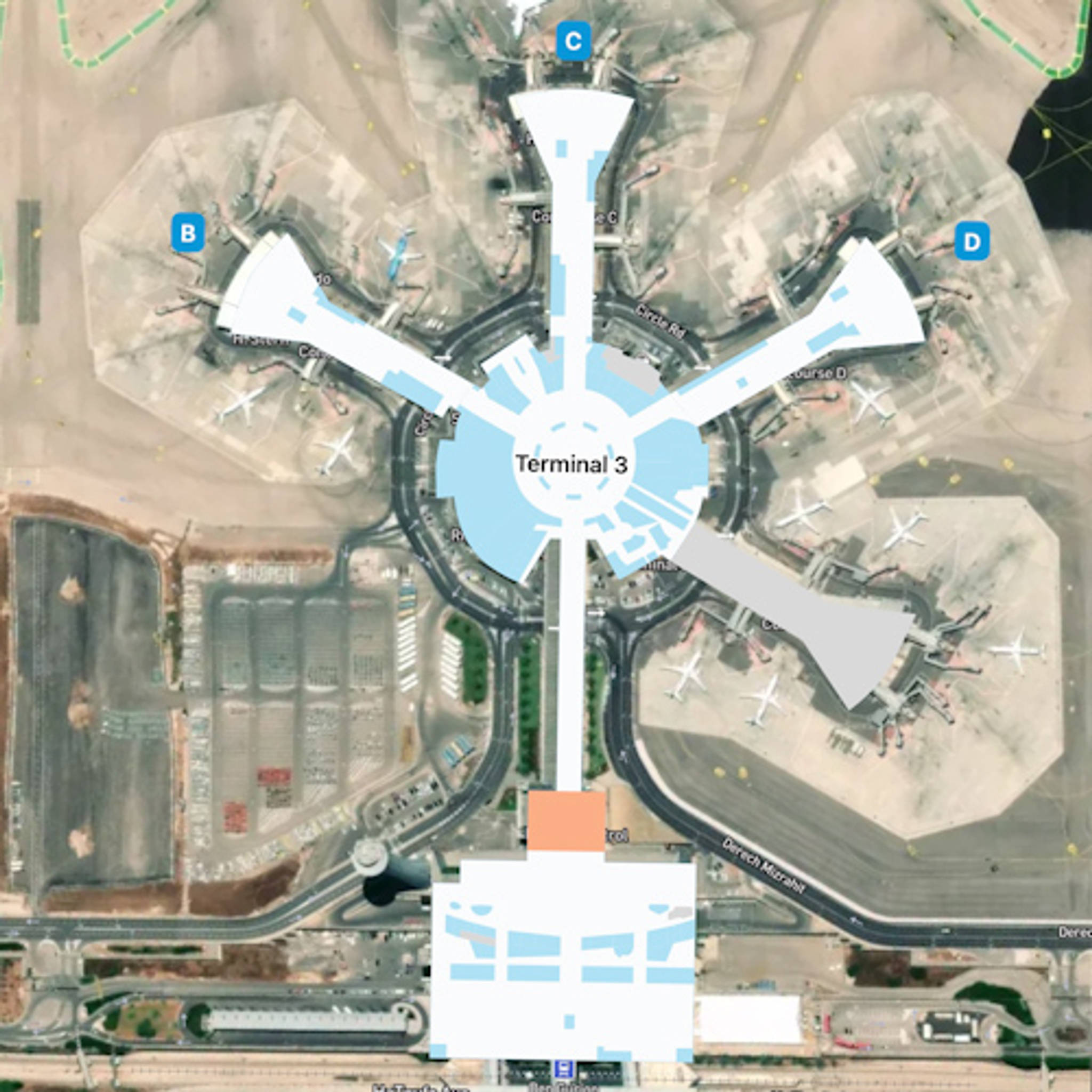
Tel Aviv Ben Gurion Airport Terminal Map
Getting Around TLV Airport
TLV Airport consists of two main terminals: Terminal 1 and Terminal 3. Terminal 1 is primarily used for domestic flights and some international low-cost carriers. It's smaller and navigating through it is relatively straightforward. Terminal 3, on the other hand, is the main international terminal and is larger, with more facilities and longer distances to cover.
Here are some tips to help you get around inside the airport:
- Shuttle Services: A free public shuttle runs between Terminal 3 and the railway station to Terminal 1 every 15 to 30 minutes, depending on the time of day. This is handy if you need to move between terminals.
- Walking and Moving Walkways: Terminal 3 is expansive, with multiple levels. After landing, you might have a considerable walk to the baggage claim and exit areas. Look for moving walkways which can ease your walk.
- Signage: Both terminals are well-signed. Follow the signs for transfers, exits, and services like car rentals, which are located between the arrival and departure areas in Terminal 3.
Terminal 3 also features a variety of shops, restaurants, and services in its duty-free area, which are accessible after security checks. If you have some time before your flight, this can be a good place to relax and grab a bite.
Discover where airlines are located at TLV Airport for seamless navigation through terminals.
Frequent Flier Terminal Tips
To help you navigate the airport terminals with ease, we've gathered the best advice and tips from TLV-based frequent travelers, flight attendants, pilots, and airport staff. Their first-hand insights will guide you through the TLV terminals for a smoother experience. Here's what they have to say:
"If you're flying out of Terminal 3, make sure to use the moving walkways. They save a lot of time, especially if your gate is far." — Avi M., Holon, March 2025
"Last time I was at the airport, I found that the best coffee is at Cafe Cafe in Terminal 3. It's a great spot to relax before a flight." — Yael B., Ramat Gan, April 2025
"For those transferring between Terminal 1 and Terminal 3, the shuttle is a lifesaver. It runs every 15 to 30 minutes and is free." — David K., Petah Tikva, May 2025
"I always recommend using the fast track lanes at security if you can. They're available for business class passengers and make the process much quicker." — Sarah L., Bat Yam, June 2025
"If you have a long layover, the Dan Lounge in the main terminal is worth checking out. It has comfortable seating and free Wi-Fi." — Amir T., Herzliya, July 2025
"Don't miss the duty-free shopping in Terminal 3. The prices are competitive, and there's a wide variety of products." — Lior N., Tel Aviv, August 2025
"For a quick bite, I always head to Aroma Espresso Bar. It's consistently good and conveniently located in the terminal." — Maya S., Rishon LeZion, February 2025
iFly Tip: Keep your kids happy and occupied during your flight with advice from our flying with children guide.
Security & Screening
In this section, you'll discover detailed information about the various security and screening processes at the airport. Learn about the locations of security checkpoints, including the main entrance and gate checkpoints, and the availability of fast track lanes for expedited passage. Additionally, find out where passport and immigration control areas are situated, and explore options for renewing or enrolling in TSA PreCheck to ensure a smoother travel experience.
Locations of Security Checkpoint(s)
Tel Aviv Airport has several security checkpoints located throughout the airport. The main security checkpoint is located at the entrance to the terminal building, where passengers are required to pass through a security screening before entering the terminal. There are also additional security checkpoints located at each gate before boarding the aircraft. These checkpoints are staffed by security personnel who conduct thorough checks of passengers and their carry-on luggage to ensure the safety of all passengers and crew.
Fast Track Lanes and Locations
Fast track lanes are available for passengers who wish to expedite their passage through security checkpoints at TLV Airport. These lanes are located at the main security checkpoint and at each gate checkpoint. Passengers who are eligible for fast track lanes include those traveling in business or first class, members of certain frequent flyer programs, and passengers who have purchased a fast track pass. These lanes allow passengers to bypass the regular security lines and proceed directly to the front of the queue.
Passport & Immigration Control Locations
Passport and immigration control at the airport is located in the main terminal building. Upon arrival, passengers will be directed to the passport control area, where they will be required to present their passport and any necessary travel documents. Israeli citizens and residents will be directed to a separate line for expedited processing. After passing through passport control, passengers will proceed to the baggage claim area to collect their luggage before proceeding to customs.
Ready to Renew or Enroll in TSA PreCheck* for Faster Travel?
Renew Your TSA Pre Membership
Is your TSA PreCheck membership expiring soon? Renew your 5-year membership online with ease through this exclusive iFly offer. Continue to enjoy the benefits of faster airport security, including shorter lines and the convenience of not having to remove shoes, belts, or laptops. Don’t wait—Renew today!
Enroll in TSA PreCheck
If you’re new to TSA Pre, now is the perfect time to enroll! Take advantage of this offer to join the program and start enjoying stress-free travel. With PreCheck, you’ll breeze through airport security with shorter lines and no need to remove shoes, belts, or laptops. Enroll Now!
*TSA Precheck is available to U.S. citizens, U.S. nationals, and lawful permanent residents.
iFly Tip: Breeze through the airport with advice from our wait times page.
Food, Shops & Services
TLV is a hub for international travelers and offers a variety of food and shopping options to make your journey more enjoyable. The airport has several food courts and restaurants that cater to different tastes and dietary requirements. Whether you are in the mood for a quick snack or a full meal, you will find plenty of options to choose from. Some of the popular food outlets at the airport include Burger Ranch, Cafe Cafe, and Aroma Espresso Bar.
In addition to food and shopping, the airport also offers a range of amenities and services to make your travel experience more comfortable. The airport has several lounges where you can relax and unwind before your flight. If you need to catch up on work, the airport has free Wi-Fi and charging stations throughout the terminals. The airport also has a duty-free shopping area where you can purchase souvenirs, cosmetics, and other items at tax-free prices.
For those who need to take care of some last-minute shopping, the airport has a variety of shops selling everything from books and magazines to clothing and accessories. Some of the popular shops at the airport include Victoria's Secret, Swarovski, and Super-Pharm. Whether you are looking for a gift for a loved one or something for yourself, you are sure to find something that catches your eye at Tel Aviv Ben Gurion Airport.
For a detailed overview of food and shopping options, visit the dining and shopping page.
Baggage Claim Areas
Baggage claim areas at Tel Aviv Ben Gurion Airport are located in the arrivals hall of each terminal. Passengers can easily locate their designated baggage claim area by checking the flight information displays or asking airport staff for assistance. Baggage carts are available for use in the baggage claim areas, and passengers can also find luggage storage facilities nearby.
About this Page: Please note that while we strive to keep the content on this page current and accurate, we cannot guarantee it due to the ever-changing nature of airports and airlines; for more details about our data and practices, refer to our Trust & Transparency statement. To report any data issues, use our feedback form.
iFly Tip: Learn how to keep your toddler entertained on flights by visiting our air travel with toddlers page.
Tel Aviv Ben Gurion Terminal Q&A
Find more help here for your journey through the airport