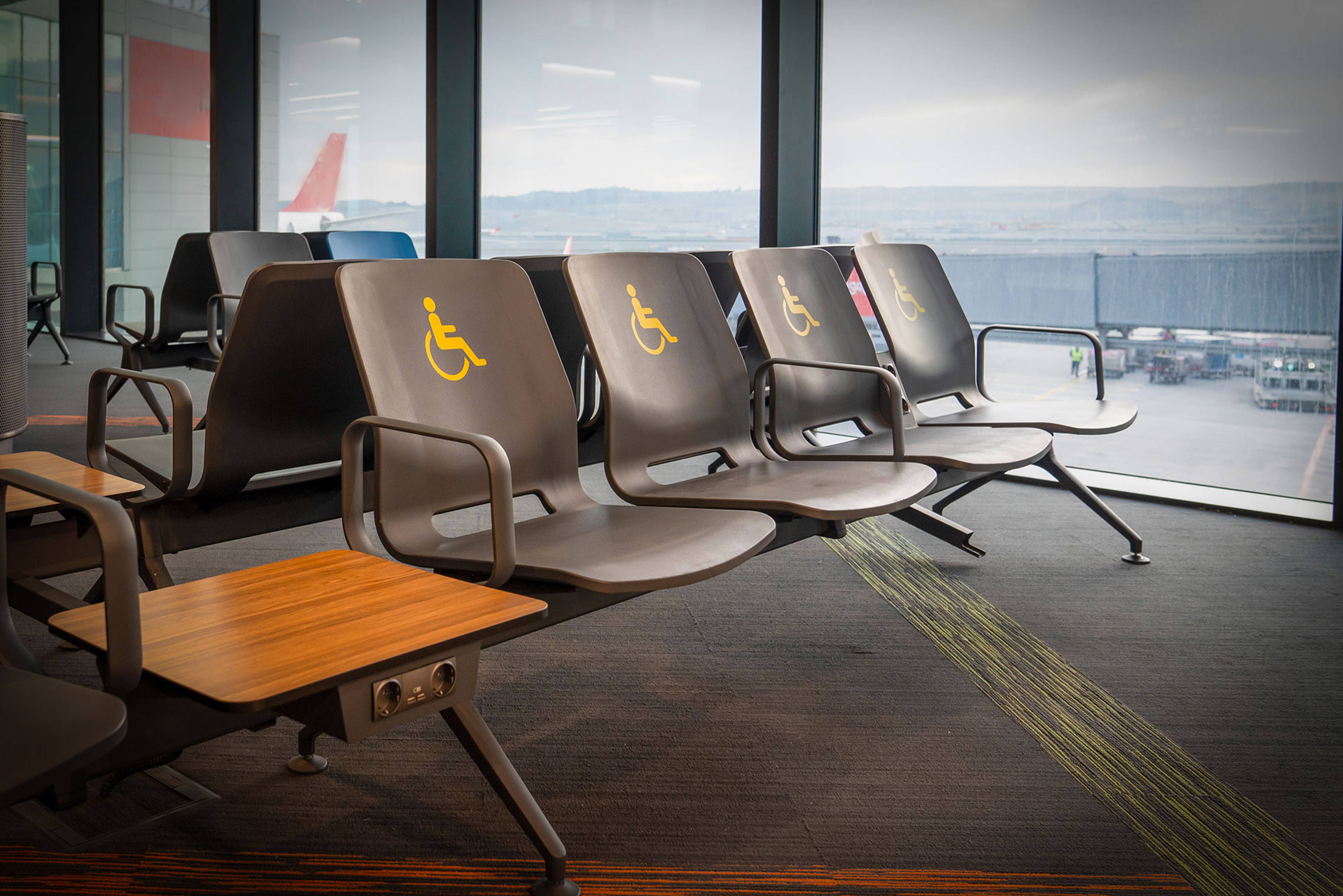

Emergency / Medical Servicesat San Jose Mineta SJC Airport
In an emergency, dial 911 from a standard phone /cell phone, or 111 from any white courtesy phone.
Automated Exernal Defibrillators are located throughout the terminal.
Automated Exernal Defibrillators are located throughout the terminal.
People With Special Needs / Persons With Disabilities
Passengers with special needs:
1. If you need wheelchair assistance, contact your airline at least 72 hrs prior to departure; also state any other needs you will have.
You can also rqeust a wheelchair from SkyCaps - dial 55 from any airport courtesy phone.
2. Reserved wheelchair-accessible vehicles are available in both terminals at SJC Airport - however, it is recommended to reserve a wheelchair from your airline when making flight reservations .
3. Cars displaying appropriate placard can park in designated spaces at the Hourly ot 2 (for Terminal A) or Hourly Lot 3 (for Terminal B.
4. All restrooms are accessible.
5. TTY phones are available throughout the terminal.
6. The Pet Relief area is outside of Terminals A & B, north of ticketing area, open 24/7.
1. If you need wheelchair assistance, contact your airline at least 72 hrs prior to departure; also state any other needs you will have.
You can also rqeust a wheelchair from SkyCaps - dial 55 from any airport courtesy phone.
2. Reserved wheelchair-accessible vehicles are available in both terminals at SJC Airport - however, it is recommended to reserve a wheelchair from your airline when making flight reservations .
3. Cars displaying appropriate placard can park in designated spaces at the Hourly ot 2 (for Terminal A) or Hourly Lot 3 (for Terminal B.
4. All restrooms are accessible.
5. TTY phones are available throughout the terminal.
6. The Pet Relief area is outside of Terminals A & B, north of ticketing area, open 24/7.
Tips, Help & Resources
iFly.com helps you get around San Jose Mineta airport with ease. Here are a few recommendations that can help you navigate and make the most of your airport visit:
- Check here for info on lounges or clubs where you might be able to access.
- Missing an item? Forget or lost something at security? Please find info & contact detail for items lost in the airport here.
- If you have a longer layover and need to kill some time before your flight's departure, check out these ideas to help pass the time.
- Search different travel sites, and even other airports near your departure or destination, to secure the cheapest flights available from San Jose Mineta Airport.
- After clearing security, open the map of SJC airport to navigate through the terminals, and see all restaurant and shopping options along the way and at your gate.
- Wifi access is free, so getting on the internet will also help navigate thru the terminals or finding that cafe before you board.
Find more help here for your journey through the airport